Is the city responsible for cleaning my private sewer?
Responsibility depends on the serving utility and the location of the fault. The local information on this page explains which department to contact before assuming the problem is private.
Monroe, Michigan · Drain and sewer services
Restore flow through the private sewer where cleaning is suitable.
Looking for sewer line cleaning in Monroe? A private sewer carries wastewater from the building toward the public collection system. We investigate its access, condition and restriction before recommending a cable, jetting or a repair assessment.
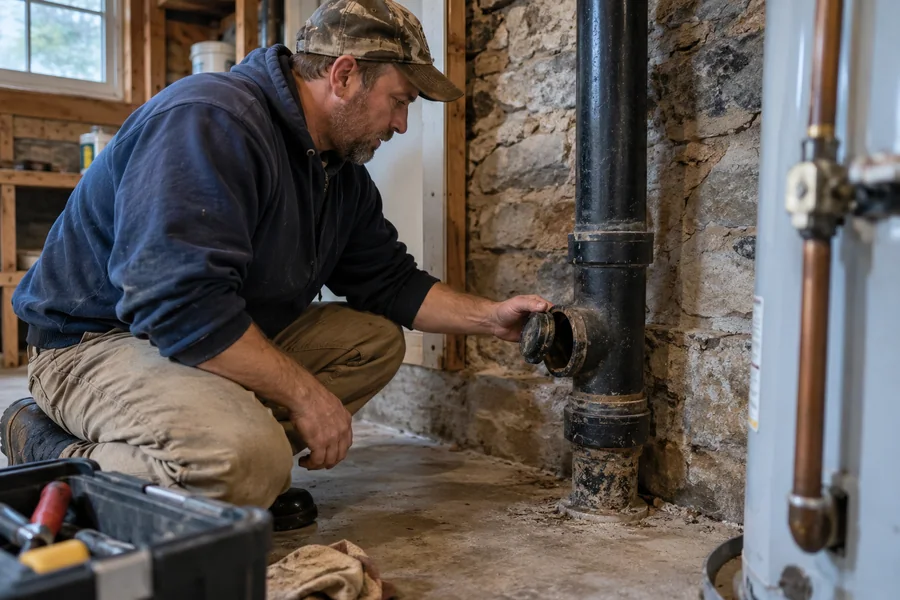
Identify the wastewater system before choosing the next call.
The City of Monroe provides a wastewater trouble-reporting route for sewer backups and odors. Confirm the utility serving the property rather than relying on a Monroe postal address alone.
Describe whether the issue is limited to one fixture or continues when the house is not using water. For work around a yard or drive, identify existing access caps and keep previous pipe records available. Any excavation plan should include utility locating.
Repeated backups, debris returning at a cleanout or slow drainage across the house can indicate a sewer restriction. Weather-related backups also need the public system considered. A private cleaning service cannot correct an obstruction or surcharge in the municipal main.
Cleaning and repairing are separate decisions. Root removal may restore flow while leaving a damaged joint behind. A clear explanation of the remaining condition is more useful than treating every cleared line as new.
Access, length, pipe material and debris determine the cleaning scope. Ask whether the quote includes the full intended section, inspection footage and additional passes if deposits remain.
Keep a record of recurring locations and previous methods. Avoid sending grease, wipes or bulky material into the drain. If the backup follows widespread flooding, report the public-system symptoms as well.
Local utility guidance for Monroe
Identify the wastewater system before choosing the next call. Describe whether the issue is limited to one fixture or continues when the house is not using water. For work around a yard or drive, identify existing access caps and keep previous pipe records available. Any excavation plan should include utility locating.
Responsibility depends on the serving utility and the location of the fault. The local information on this page explains which department to contact before assuming the problem is private.
No. Structural damage, inappropriate waste and public-system conditions can cause another problem. The findings should guide any maintenance or repair plan.
It depends on visibility and pipe condition. Some lines need initial clearing to obtain useful footage; suspected fragile or collapsed sections require a cautious inspection plan.
Have the service address, affected fixtures and timing ready. If water is entering without household water use, explain that pattern and report the possible system problem to the serving utility.
A slow sink and a basement backup need different investigations.
A blockage can hide a leaking trap, damaged fitting or poorly supported drain.
Call when wastewater is rising, a toilet is overflowing or several fixtures have stopped draining.
Hydro jetting can remove deposits that leave a line restricted after basic clearing.
When several fixtures drain badly together, the shared main deserves attention.
A sewer backup creates two jobs: address the drainage fault and manage the affected building materials.
A sewer camera can help identify roots, deposits, joint displacement and other visible defects.
A broken joint, damaged fitting or collapsed section needs a repair plan supported by the findings.
Trenchless methods can reduce surface disturbance on a suitable sewer.
Call with the address, affected fixtures and any previous inspection details. The phone line is available 24/7; confirm the current service window and proposed scope on the call.