Does every slow drain need a sewer camera?
No. An accessible trap blockage may be resolved without a sewer inspection. Recurring clogs or symptoms across several fixtures give a stronger reason to inspect farther along the line.
Dearborn, Michigan · Drain and sewer services
Find the restriction. Choose the right clearing method.
Looking for drain cleaning in Dearborn? A slow sink and a basement backup need different investigations. We check which fixtures are affected, find usable access and explain the proposed cleaning before work starts.
Separate a private restriction from a public-system problem.
Dearborn asks residents to report basement flooding, so its crew can investigate the public main. The city explains that a clear main can leave a private-line problem for the property owner to address.
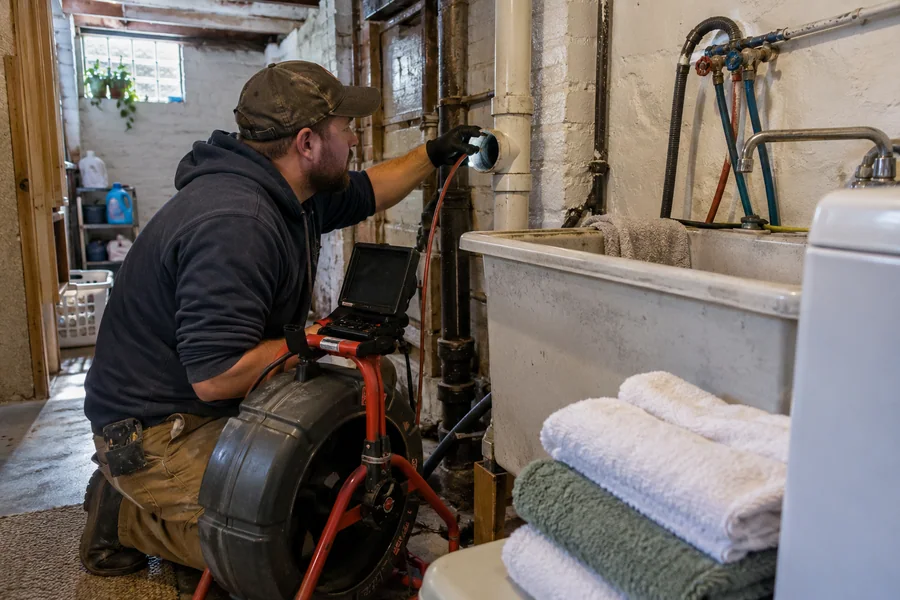
Record whether the backup follows heavy rain and whether neighboring properties are affected. For private drain work, identify the fixture, entry route and any previous cleaning point before equipment is brought through the house.
A single slow fixture can point to a trap or short branch blockage. Gurgling across several rooms, water at a floor drain or a toilet that rises when the washer empties can point farther downstream. Tell us what happens when each fixture runs; that pattern helps locate the restriction.
Cleaning removes an obstruction. It does not repair a separated joint, replace a collapsed pipe or prevent a public sewer from becoming overloaded.
The fixture, access point, cable distance and type of debris affect the cleaning quote. Removing a toilet or opening a concealed access point can change the scope. Ask which access work and final tests are included.
Use the fixtures as advised after the visit. If the same drain slows again, record how quickly it returns and whether other fixtures are affected. That history can be more useful than repeating the same cleaning.
Local utility guidance for Dearborn
Separate a private restriction from a public-system problem. Record whether the backup follows heavy rain and whether neighboring properties are affected. For private drain work, identify the fixture, entry route and any previous cleaning point before equipment is brought through the house.
No. An accessible trap blockage may be resolved without a sewer inspection. Recurring clogs or symptoms across several fixtures give a stronger reason to inspect farther along the line.
Often, a trap, overflow opening or cleanout provides access. The technician checks the fittings and explains any fixture removal before proceeding.
Name the affected fixtures, when the problem began and whether water rises elsewhere when a toilet or appliance drains.
Yes. If basement or street flooding suggests a wider issue, report it through the city water service route. A private inspection can then focus on the section identified as the property-side problem.
A blockage can hide a leaking trap, damaged fitting or poorly supported drain.
Call when wastewater is rising, a toilet is overflowing or several fixtures have stopped draining.
Hydro jetting can remove deposits that leave a line restricted after basic clearing.
When several fixtures drain badly together, the shared main deserves attention.
A private sewer carries wastewater from the building toward the public collection system.
A sewer backup creates two jobs: address the drainage fault and manage the affected building materials.
A sewer camera can help identify roots, deposits, joint displacement and other visible defects.
A broken joint, damaged fitting or collapsed section needs a repair plan supported by the findings.
Trenchless methods can reduce surface disturbance on a suitable sewer.
Call with the address, affected fixtures and any previous inspection details. The phone line is available 24/7; confirm the current service window and proposed scope on the call.