Why does water rise at the basement floor drain?
It may be the lowest opening connected to a restricted shared drain. Inspection is needed to identify whether the cause is inside the building, in the private sewer or farther downstream.
Livonia, Michigan · Drain and sewer services
Investigate the shared drain serving several fixtures.
Looking for main line drain cleaning in Livonia? When several fixtures drain badly together, the shared main deserves attention. We check the symptom pattern, locate a suitable cleanout and explain the clearing and inspection options.
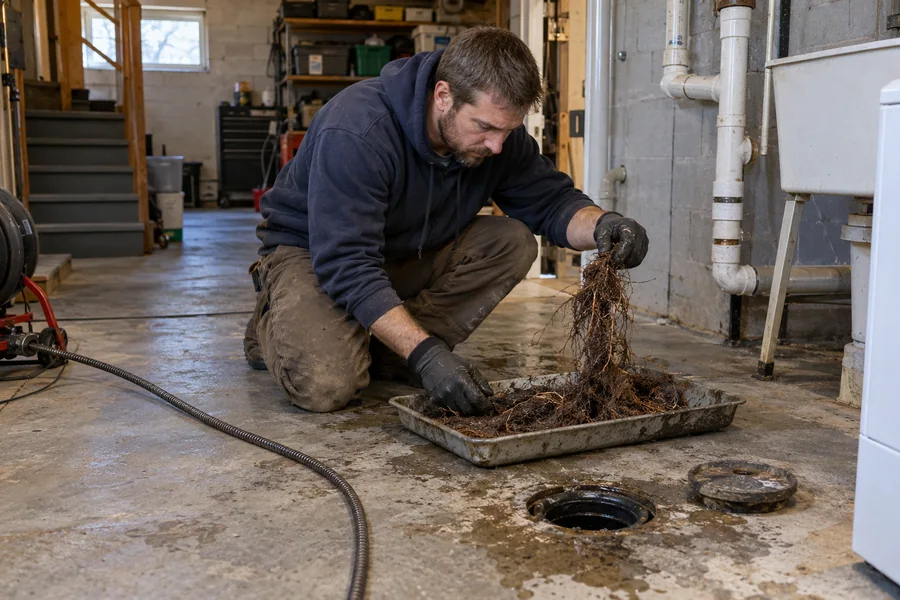
A private lead investigation may need to reach the connection.
Livonia states that the individual sewer lead and its connection to the main are the homeowner’s responsibility. That makes the inspected route and the recorded end point useful parts of a private sewer assessment.
For an occupied basement, describe the stair width, stored items and floor finishes before the visit. A clear route protects belongings and lets the technician position equipment near appropriate access. Report possible public-main symptoms to the city as well.
A main line machine needs a practical position close to suitable access. Before the Livonia visit, describe stair turns, laundry equipment and finished floor areas between the entrance and the cleanout. Clear a dry route through stored belongings without opening the drain yourself.
Explain whether the washer, ground-floor toilet and basement floor drain react at the same time. That pattern can guide the first shared section to investigate. Keep the previous recording with any notes identifying the connection; it can help distinguish a repeat obstruction from an area that was never inspected.
A low floor drain may show the backup before an upstairs sink does. A toilet that bubbles during laundry use can also indicate a restriction beyond one fixture. The location of the obstruction must be established; the lowest drain is not necessarily where the blockage started.
Restoring a passage through debris does not establish that the sewer is structurally sound. Repeat roots, standing water or a sudden stop in the cable can justify further inspection before more force is applied.
Main line quotes depend on usable access, distance and the obstruction. A buried, damaged or inaccessible cleanout may require separate access work. Ask for the cleaning limit and inspection scope in writing.
Keep the cleanout visible and accessible. Retain inspection recordings or notes from previous work, including where roots or damage were found. They can reduce uncertainty when the same symptoms return.
Local utility guidance for Livonia
A private lead investigation may need to reach the connection. For an occupied basement, describe the stair width, stored items and floor finishes before the visit. A clear route protects belongings and lets the technician position equipment near appropriate access. Report possible public-main symptoms to the city as well.
It may be the lowest opening connected to a restricted shared drain. Inspection is needed to identify whether the cause is inside the building, in the private sewer or farther downstream.
Sometimes alternative access is practical, but fixture removal and reinstatement change the scope. A suitable cleanout is assessed first.
Not automatically. The extent of the intrusion and the condition of the pipe determine whether cleaning, targeted repair or replacement is appropriate.
Ask which access point was used, how far the inspection reached and whether the connection was visible. Keep the observations with earlier cleaning or repair records.
A slow sink and a basement backup need different investigations.
A blockage can hide a leaking trap, damaged fitting or poorly supported drain.
Call when wastewater is rising, a toilet is overflowing or several fixtures have stopped draining.
Hydro jetting can remove deposits that leave a line restricted after basic clearing.
A private sewer carries wastewater from the building toward the public collection system.
A sewer backup creates two jobs: address the drainage fault and manage the affected building materials.
A sewer camera can help identify roots, deposits, joint displacement and other visible defects.
A broken joint, damaged fitting or collapsed section needs a repair plan supported by the findings.
Trenchless methods can reduce surface disturbance on a suitable sewer.
Call with the address, affected fixtures and any previous inspection details. The phone line is available 24/7; confirm the current service window and proposed scope on the call.